
Diabetic Foot Ulcers and Wound Healing
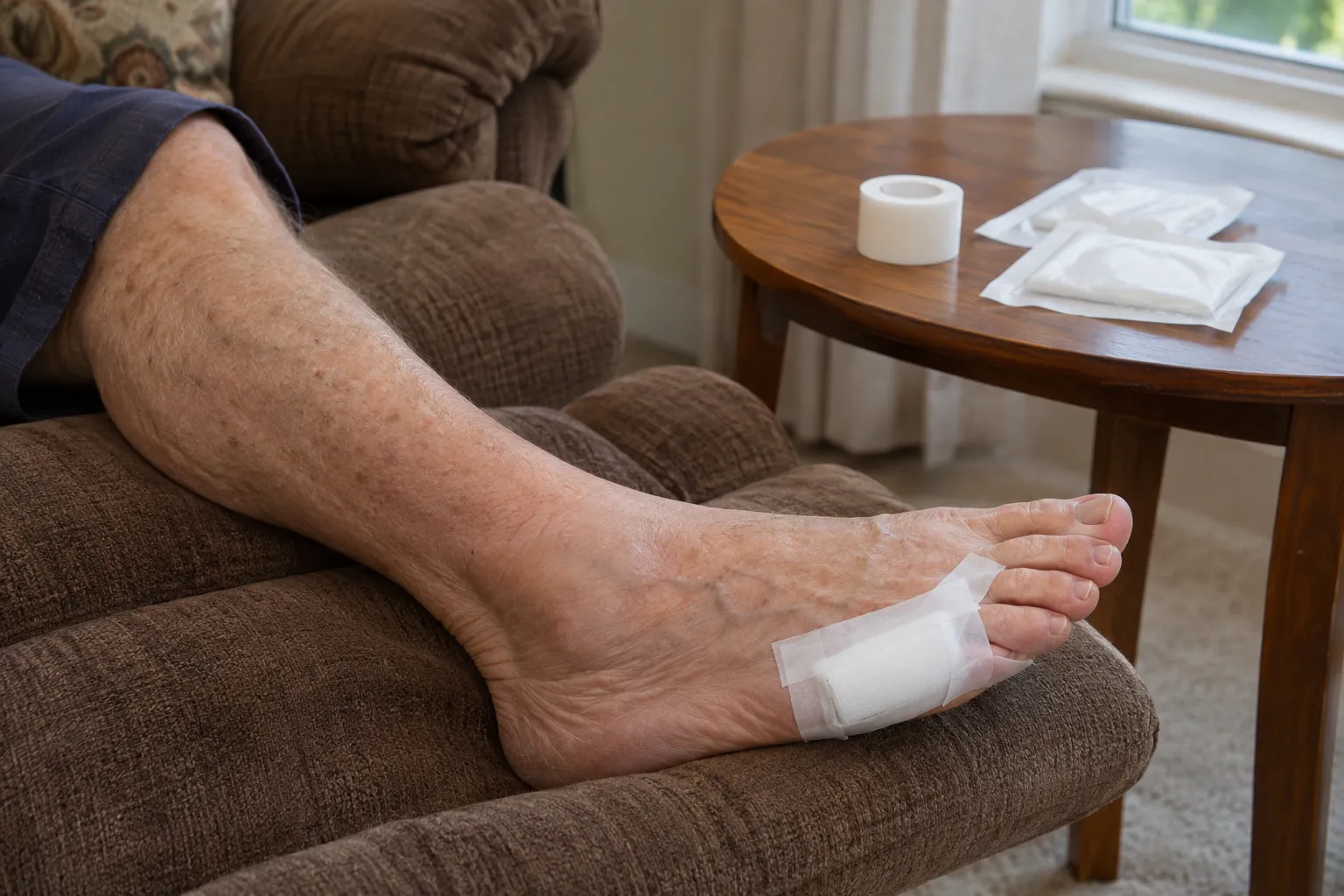
Care for a diabetic foot ulcer is judged by one result before any other, and that result is healing. APMA says the primary goal in the treatment of foot ulcers is to obtain healing as soon as possible. A completed course of care ends with a closed wound, not with a dressing that has been changed on schedule.
What finished care looks like
Read that goal as a yardstick. Care is on track when someone can say how the wound is expected to heal, who is checking on it, and what is being done about blood sugar. PubMed Central (NIH) carries a paper noting that the healing times of leg and foot ulcers are decreased in diabetic patients with lower HbA1c, so blood sugar belongs inside wound care, not beside it. For a symptom and treatment overview, Cleveland Clinic's page on diabetes-related foot conditions is a sound companion.
Which article settles which doubt
The American Diabetes Association files these problems under foot complications, a useful frame before you pick a question below.
- Is the wound really a circulation problem? Read Ulcers Caused by Poor Blood Flow.
- What keeps a new ulcer from forming? Read Pressure, Footwear and Ulcer Prevention.
- What should happen to the wound day to day? Read Caring for a Diabetic Foot Wound.
- Why is mine not closing? Read Why Some Foot Wounds Stall.
- What does healing look like with diabetes? Read Healing a Foot Ulcer When You Have Diabetes.
- Why is the shape of the foot changing? Read Charcot Foot and the Collapsing Arch.
Foot Health Facts also describes Charcot foot, a rocker-bottom foot deformity, which the last article in the list takes up.
The shortcut that passes for a plan
The shortcut readers most often accept is a plan that amounts to watching. Watching is not treatment, and it sits badly with a standard that asks for healing as soon as possible. A plan that never mentions blood sugar also leaves out the factor that the research above ties to healing time.
When the standard is not being met
If you have been told to wait without a plan, if nobody owns the next look at the wound, or if blood sugar has never come up, the standard is not being met. A second opinion is reasonable at that point. Bring the wound's history, ask the second clinician to state the goal, and compare it with the one APMA gives.