
Pressure, Footwear and Ulcer Prevention
Preventing a foot ulcer comes down to pressure: where it lands on the foot, and whether footwear is set up to take it off. Below are the standard for that footwear, the advice that falls short of it, and one check to run on your own shoes.
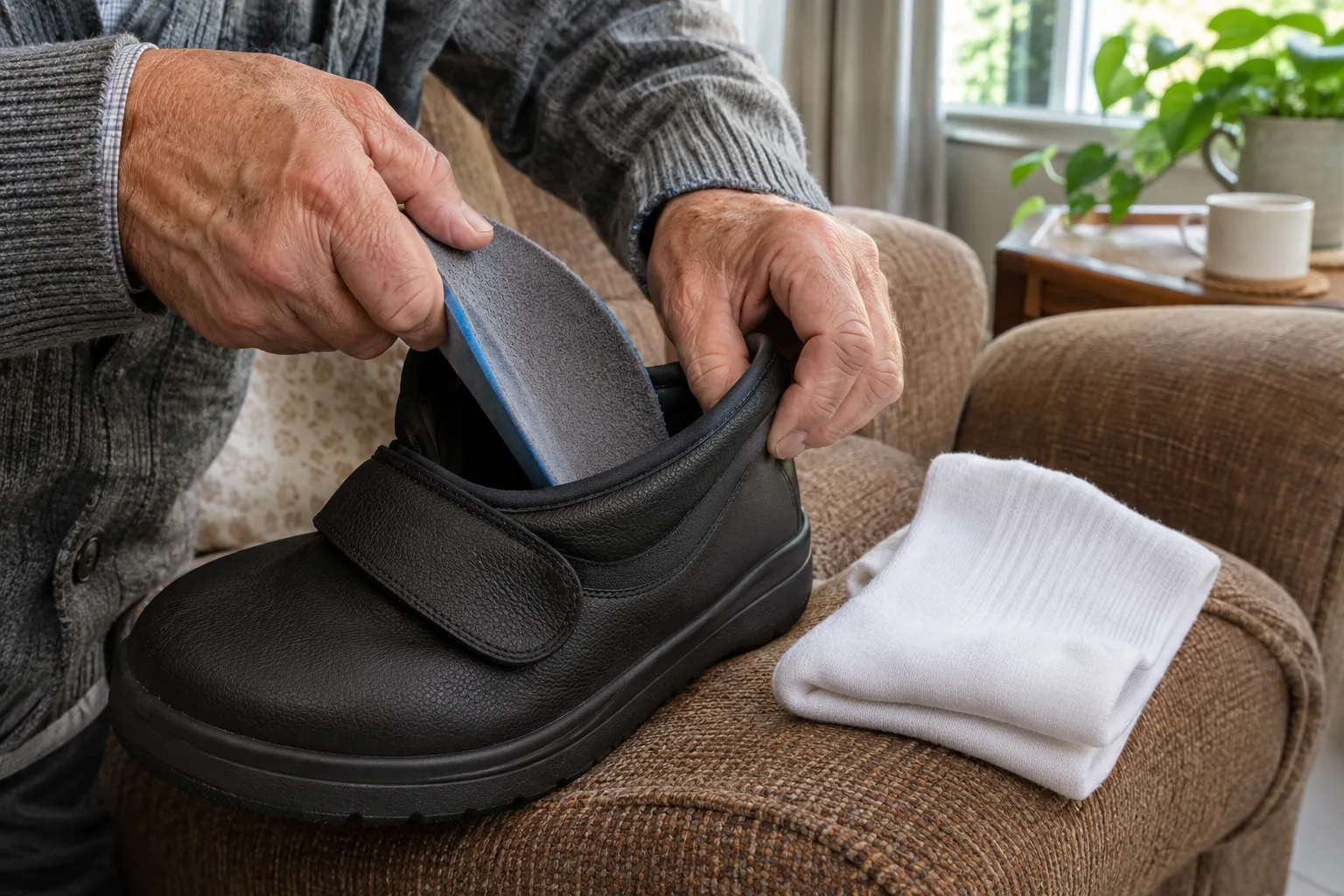
The condition and the standard
PubMed Central (NIH) carries an article stating that offloading footwear reduces pressure on a specific part of the foot to allow an ulcer on that part to heal or to prevent new ulcers. A second PubMed Central (NIH) paper says current foot care recommendations are primarily based on research regarding the prevention of ulcer recurrence and focused on reducing the magnitude of plantar stress (pressure overload). The standard is pressure reduction aimed at a named spot on the foot. The American Diabetes Association lists foot complications as part of its diabetes guidance, which frames why that spot matters.
Signs the standard is being met, and signs it is not
Prevention is on track when someone has said which part of the foot carries the load and how the footwear relieves it. It is not being met when the advice is to wear comfortable shoes and nothing more.
The shortcut and what it costs
The shortcut is footwear advice that never says which part of the foot is being unloaded. Without a named spot, nobody can judge whether the shoe does its job. For how footwear fits into treatment, see what APMA writes on diabetic wound care.
What adequate follow-up looks like
Follow-up should check the footwear against the foot. Ask which spot was loaded, whether the shoe still unloads it, and whether the skin at that spot has changed since the last visit.
The one check to make
Take the shoes you wear most to the next visit and ask where they relieve pressure. For a daily reminder of the basics, the CDC publishes a Tips for Healthy Feet graphic for people with diabetes.