
Caring for a Diabetic Foot Wound
Care for a diabetic foot wound is judged by a short checklist, and each item either appears in the plan or does not. This article sets out that checklist, the shortcut that skips it, and one check to make.
The condition and the standard
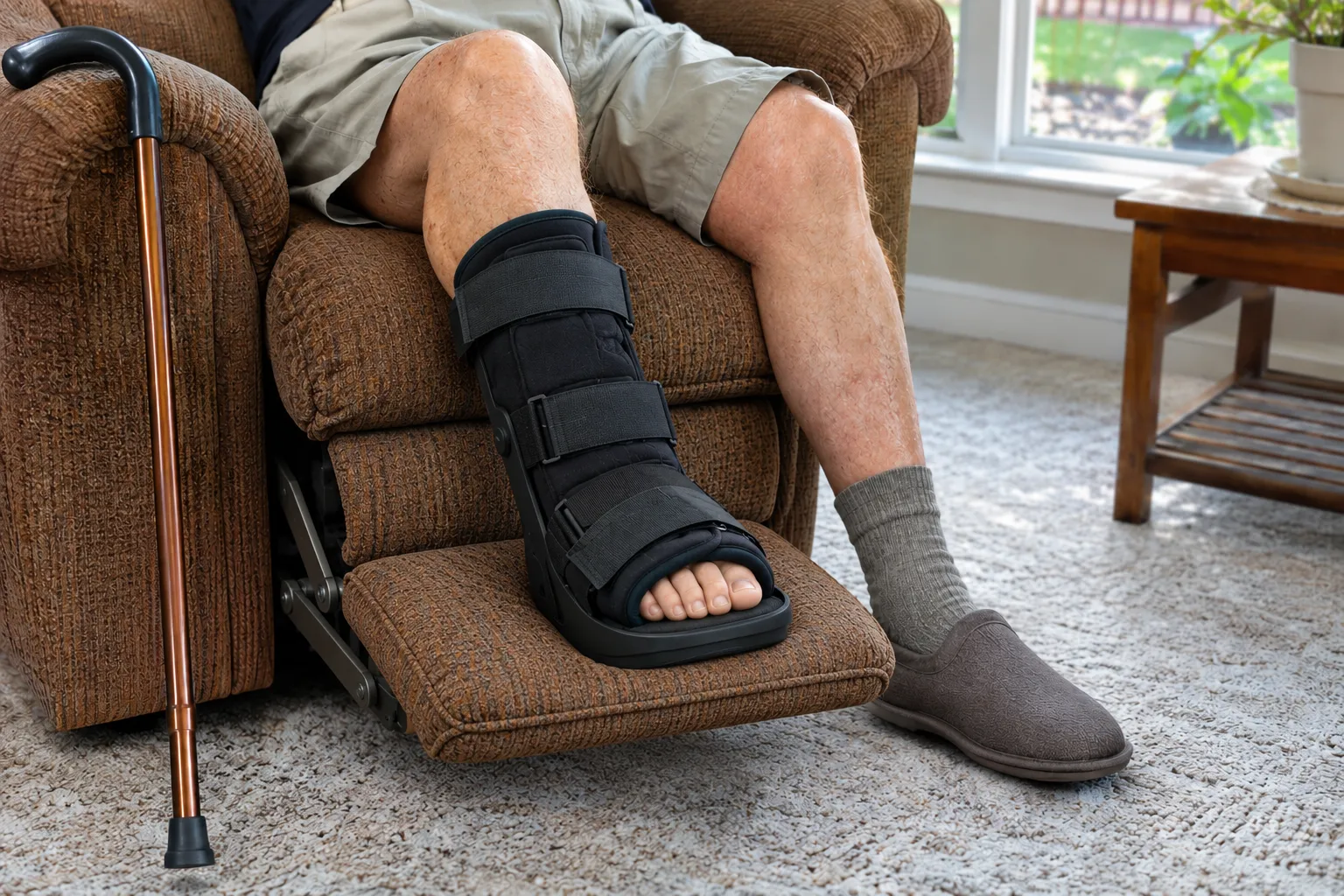
APMA says that to keep an ulcer from becoming infected, it is important to keep blood glucose levels under tight control, keep the ulcer clean and bandaged, cleanse the wound daily using a wound dressing or bandage, and avoid walking barefoot. APMA also says that for optimum healing, ulcers, especially those on the bottom of the foot, must be off-loaded, and that you may be asked to wear special footgear, or a brace, specialized castings, or use a wheelchair or crutches. That is the standard: glucose, a clean covered wound, daily cleansing, shoes on, and weight taken off the ulcer. The American Diabetes Association publishes a guide to foot complications for the wider picture.
Signs the standard is being met, and signs it is not
The standard is being met when your plan names every item on that checklist and says who is responsible for each. It is not being met when the plan is a dressing and a return date with no mention of blood glucose, off-loading or bare feet.
The shortcut and what it costs
The shortcut is dressing the wound and leaving weight on it. A wound that is bandaged well but still carries full weight is missing the off-loading that APMA ties to optimum healing, especially on the bottom of the foot. Ask what is taking the load off the ulcer, whether that is footgear, a brace, a cast, or crutches.
What adequate follow-up looks like
Follow-up should walk the checklist at every visit. Is glucose under control, is the wound clean and covered, is it being cleansed daily, and is the off-loading still in place? Any item with no answer is a gap to raise.
The one check to make
At home, read the plan against the four parts of the first APMA sentence and mark any that are missing. Take that list to the next visit. APMA's page on diabetic wound care carries the full text for comparison.