
Turf Toe and the Overbent Big Toe
Turf toe is judged by how clearly the injured joint is named and how well it is protected while it recovers. This article sets that standard and names the tape-and-play habit that falls short of it.
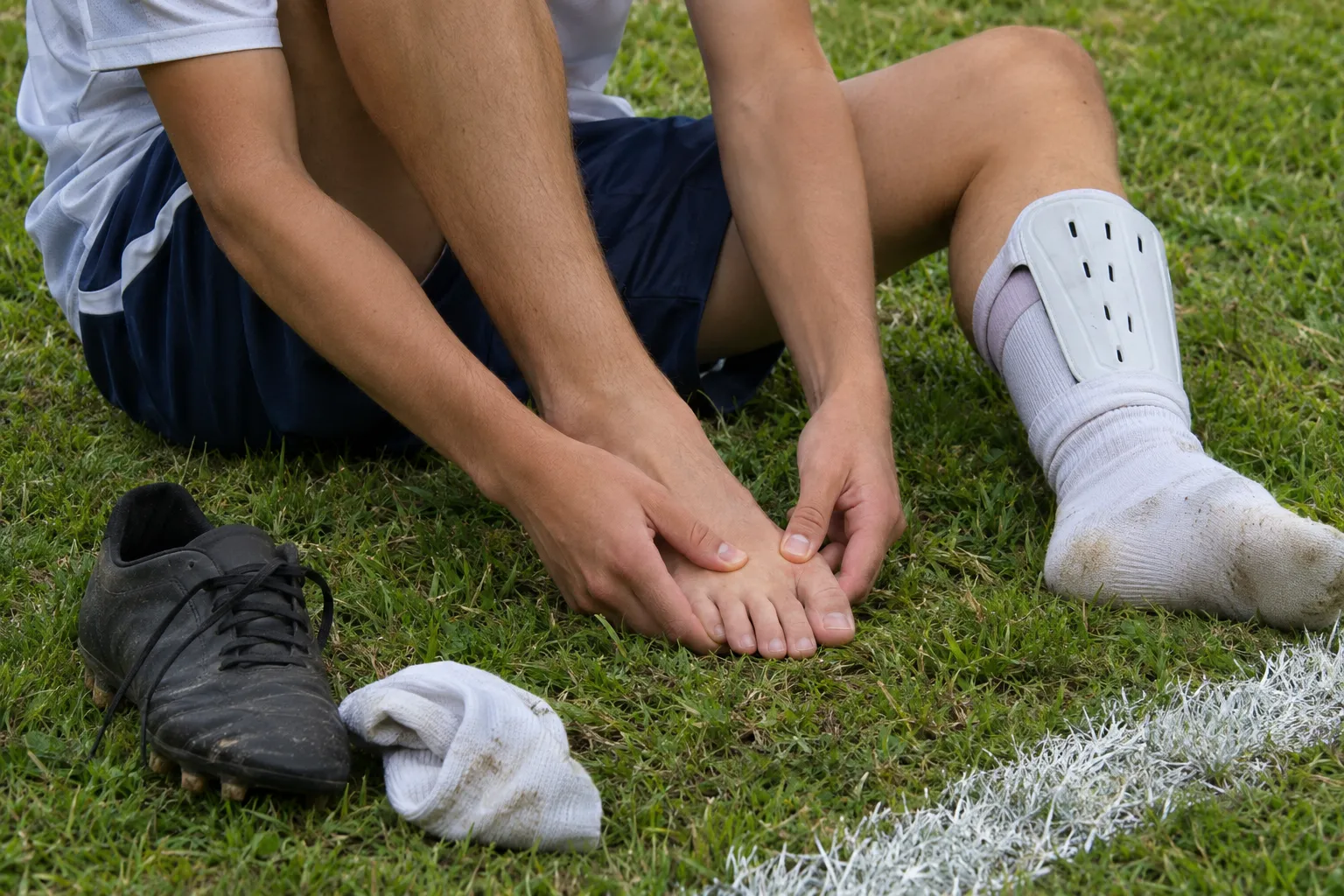
The condition and the standard
Cleveland Clinic says turf toe is an injury in your big toe joint when ligaments, tendons and soft tissues in the joint stretch or tear. Cleveland Clinic adds that turf toe can occur when you bend your big toe too far or too forcefully, causing soft tissues and ligaments to stretch or tear. Because the injury lives in those tissues, a sound plan names the soft tissue involved and the movement that caused it, not just a sore toe.
Signs the standard is being met, and signs it is not
The standard is being met when you are told which tissues in the joint were hurt and how the overbending happened. It is not being met when the verdict is a bruised toe with no mention of ligaments or tendons. Cleveland Clinic's page on what turf toe is, its causes, symptoms and treatment is a fair yardstick for how much detail to expect.
The shortcut and what it costs
The shortcut handles a stretched or torn joint like a bruise: tape it up and play on. A bruise label underdescribes an injury to ligaments and tendons, and it leaves the joint with no plan. AAOS OrthoInfo's page on turf toe gives a second description to compare against what you were told.
What adequate follow-up looks like
Follow-up should record what the joint can do, not only how it feels. Ask which movement is being protected and what has to be true before sport resumes. Foot Health Facts covers lacrosse injuries to the foot and ankle for athletes in that sport.
The one check to make
Before your next visit ends, find out which tissues in the big toe joint were hurt and what you are protecting while they recover. If surgery comes up, a PubMed Central article titled Outcomes of Surgical Management of Turf Toe: 12-Year Results reports on that route, and it is worth bringing to the conversation.